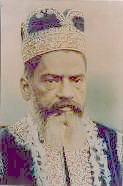
Radhasoami History 9

Radhasoami, Beas Secret History, radhasoami, shabd Sawan visited Babuji Madhav Sinha, the 5th sat guru, and showed great respect, long after his break from Agra. Babuji had been a favorite of Swami Ji and Sawan had to be in awe of him. Bubuji Sinha, in a still existent letter, informs his son, "Sawan has gone too far to recede now", after Sawan left their meeting. Corres. with Americans 5, shows actual photostat of handwritten letter by Babuji to his son. Babuji never accepted the legitimacy of Jaimal's or Sawan's initiations outside Council authority, or their Guruships at any time, according to court depositions.
.............
Remember, Swami Ji left Salig Ram and Radhaji as 'visible masters' in his will, not Chachaji. Chachaji first initiated for Radhaji, Salig Ram, Misra, then the woman master Bauji Devi, not for himself . Sudarshan did the same according to court deposition testimony .
..................................
Sawan (or whoever initiated at Beas) was licensed to initiate for Misra, Chachaji had given the Soami Bagh Gardens to Misra. Sawan could NOT initiate for Radhaji. She was dead ten years before Sawan became an initiator in 1904. Sawan could only initiate for the living master of the time, Misra. When Sawan initiated you, you were Misra's (3rd guru) disciple under article 16 of the Council. Later you were Bauji Devi's (4th guru) and Babuji's (5th guru) disciple when Sawan initiated, until around 1915, when Sawan declared himself master at Beas.
................
Sawan always said you must initiate for a living guru. Jaimal was dead and so was Radhaji. Chachaji followed Misra's guruship. Sawan was inept according to his own words. Jaimal's letters to Sawan show him not advanced in sadhana.
..........................................
Radhaswami Teachings, Lekh Raj Puri, Beas, 1972 pages 125-129. Mr. Puri states Pratap Singh (Chachaji), Salig Ram, Garib Das and Jaimal Singh worked as Gurus, "But, these highly spiritual men could not be under any Council, or committee. How could they be ? These were true Masters...nobody can dictate to saints and Gurus on spiritual matters." Mr. Puri 'forgets' to mention Chachaji was the president of the Council and one of the true Gurus he just previously mentioned. Chachaji signed the excommunication warning of the Council to Jaimal, just three days before Jaimal died. A rather remarkable omission . Salig Ram was dead 4 years before Council started obviously .

........................................
Mr. Puri states the successor Guru can only be appointed by the previous Guru, therefore no interregnum can occur "and it is against the teachings of Swami Ji and all other Saints." Mr. Puri 'forgets' to mention it took Jaimal seven years to initiate his first person and fourteen years to set up Beas. Remember, according to Beas literature , Jaimal said to go to Chachaji when he was dying. Sawan claimed he was inept and powerless. Jaimal was not in Swami Ji's last will statement and Sawan was not in Jaimal's last statement according to Beas. We know Sawan did not break till after Chachaji's death in 1911; very gradually. It is an absolute fact that Sawan accepted Misra as sat guru, or he could not have initiated. Had Sawan broken his promise to Chachaji anytime in 1911 or prior, by posing as a guru, it is almost a certainty the Council would have excommunicated him. And it appears there were other unrelated excommunications by Chachaji and Council, which Sawan would have been keenly aware of. *See note below.

c. Jeffrey K. Bedrick

HOT LINKS

Next Page
Go to page 1 Home of Secret history

'Lalaji' Adjohia, Salig Ram's son.
'Lalaji' Adjohia inherited largest RS group in 1898
and was Council president after Chachaji
till death in 1926. He was major figure in RS history.
*********************************************
Chachaji had an extremely bad temper and was not someone to fool around with. In Holy Epistles,Agra,pt2,p.67,1961, it is recorded Salig Ram warned Misra (3rd Guru) in a February 13, 1889 letter that his best friend, Babuji Madhav Sinha (who became 5th sat guru), had better pay respects to Radhaji at Agra before comming to see him, or he could be "threatened with excommunication, or otherwise maltreated" by Chachaji. That Chachaji's "actions apparently seem uncontrolled by any principles or regard for anyone." !!!! Salig Ram is using a wry sense of humor in this statement, as he is the Sat Guru of the day. But, the humor has an unmistakable sense of seriousness to it. Chachaji had his hands full with all the fake gurus running around those days. His actions and character seem quite sterling, despite this, as even Salig Ram admitted Chachaji was right most of the time.

Photos copyright Peepal Mandi Radhasoami group
----------
Dr. David Lane on R. S. Gurus

When a guru says that the proof can be found by going within, what he is really saying is:

I HAVE NO FRICKIN EVIDENCE.

When a guru says that Perfect Masters don't make a show of miracles because it cheapens the divine, what he is really saying is:

I HAVE NO POWER WHATSOEVER TO DO ANYTHING.

When a guru says that all things are happening due to karma, what he is really saying is:

SHIT HAPPENS AND I HAVE NO CLUE WHY.
----------

The Pineal and Schizophrenia

NOTE: The following selection comes from "The Treatment of Schizophrenia" by David McMillin. Copyright © 1991 by David McMillin. Used with permission. All rights reserved. The Treatment of Schizophrenia is currently available from A.R.E. Press in Virginia Beach, Virginia.]

The Treatment of Schizophrenia Appendix B

The Pineal

This and subsequent appendices will address various topics relevant to the treatment of schizophrenia by providing a general discussion of each subject which is followed by a selection of excerpts from the readings. In this initial appendix addressing the pineal, the discussion section will be approached from three perspectives: a brief literature review, Edgar Cayce's view of the pineal, and a look at some contemporary perspectives on the clinical significance of a form of pineal dysfunction designated as "kundalini crisis." Literature Review For centuries the pineal gland has been associated with paranormal phenomena and insanity. Eastern philosophies have tended to view the pineal as an important "chakra" or energy vortex, which if activated, opened the individual to psychic experiences and cosmic vision (Judith, 1987). Contemporaneous western philosophies also attached mystical significance to the pineal: The ancient Greeks considered the pineal as the seat of the soul, a concept extended by Descartes, who philosophically suggested that this unpaired cerebral structure would serve as an ideal point from which the soul could exercise its somatic functions. Descartes thus attributed to the pineal a prominent function in uniting the immortal soul with the body. Being influenced by this thesis, many 17th and 18th century physicians associated the pineal causally with "madness," a link that has been uncannily prophetic for the present day. (Miles & Philbrick, 1988, p. 409-410) The reference to "unpaired cerebral structure" is an example of one of the many anatomical peculiarities of the pineal gland. The brain exhibits a high degree of bilateral symmetry, a characteristic not shared by the pineal because it is not generally regarded as having left and right divisions. The pineal is a small, cone shaped gland attached to the posterior ceiling of the third ventricle of the brain, suspended in cerebrospinal fluid. Its location in the center of the brain, combined with its unique proclivity to calcify, make it a valuable landmark for neuroradiologists. Recognition of the pineal as an active endocrine gland is a recent advancement because the highly sensitive bioassays required to detect pineal secretions are relatively new. Melatonin is the most easily detected of the pineal productions and has therefore received the most attention in current research. Thus, the frequent references to melatonin throughout this review is a reflection not only of its primary biochemical status among pineal secretions but also of its accessibility. There are numerous anatomical and physiological idiosyncrasies associated with the pineal. "Relative to total body weight the pineal is small (50-150 mg in man; 1 mg in the rat), but its blood flow is second only to the kidney" (Arendt, 1988, p. 205-206). Morphologically, the pineal has been considered as a homologue of the "third eye" in certain lizards (Gray's Anatomy, 1977). The photosensitivity of pineal in humans derives from nerve impulses from the retina and may have a basis in the structure of the gland. Furthermore, it is interesting to note that some of the pigmented cells were arranged in a rosette-like structure reminiscent of developing retinal structures. When one considers these findings along with the electron microscopic observation ... it is reasonable to conclude that human pineal glands exhibit transient cellular features reminiscent of developing photoreceptor cells as shown in other mammals. (Min, 1987, p. 728) The pineal has been labelled a "photoneuroendocrine transducer" due to its photoperiodic influences on reproductive cycles, coat color, coat growth and seasonal variations in behaviors of many mammals (Arendt, 1988). "Many other seasonal variations both physiological and pathological exist in humans and it will be of interest to consider their possible relationship to daylength and other seasonal synchronizers" (Arendt, 1988, p. 210). Ralph (1984) has reviewed the role of the pineal in thermoregulation and emphasized the "adaptive" nature of the gland. The key word to understanding the pineal organ probably is "adaptation." That is, one can argue, with substantial justification, that the pineal organ participates in preparation for future conditions .... While the literature relating pineal organs to thermoregulation is not nearly as large as that dealing with reproduction, or rhythmycity, it is substantial and compelling. (Ralph, 1984, p. 193) Pineal involvement in cycles of growth and development during the life span has long been recognized. Pineal tumors have been associated with both precocious and delayed puberty in humans (Kitay & Altschule, 1954; Turner & Bagnara, 1971). Blindness has been linked to earlier menarche in girls and blind adults also appear to exhibit disynchroncities related to photosensitivity (Parkes, 1976; Lewy & Newsome, 1983). Melatonin secretions is known to decrease in amplitude from infancy to adulthood (Young et al, 1986) and during old age (Iguchi et al, 1982) Pineal involvement in circadian rhythms, particularly the sleep cycle within these rhythms, has received considerable attention in recent years. Melatonin secretion increases during sleep and decreases during waking hours (Axelrod, 1974; Arato, et al, 1985). Since light both entrains and suppresses melatonin secretion, melatonin has been called a "darkness hormone" (Arendt, 1988). Arginine vasotocin (AVT), another pineal secretion linked to sleep cycles, has been found to induce slow-wave sleep in cats (Pavel, Psatta & Goldstein, 1977) and a specific AVT antiserum markedly increases the number of REM (rapid eye movement or dream sleep) periods while decreasing REM latency (Pavel & Goldstein, 1981). However, the role of the pineal in the modulation of circadian rhythms such as sleep cycles cannot be considered as primary. Rather, it works in conjunction with other systems and has its basis in evolutionary processes. Among the vertebrates, two areas seem to have assumed major importance in the organization of circadian systems - the pineal organ and the SCN (suprachiasmatic nucleus). The pineal organ of lower vertebrates is photosensory in nature and it may have been this, presumably ancient, function that caused the pineal organ to assume such a predominant role with circadian systems. Clearly, light is the preeminent entraining or synchronizing stimulus for circadian systems, and the pineal organ may have been involved in the perception of LD (light-dark) cycles. (Underwood, 1984, pp. 245-246) In addition to being sensitive to variations in environmental light, the pineal appears to possess sensitivity to the earth's magnetic field and various electromagnetic influences. There is ever increasing evidence that the magnetic irradiation of a strength equal or approximate to that of the geomagnetic field exerts a variety of behavioral and physiological effects on the organism. Some studies focused on the pineal gland as the most feasible candidate for a mediator of magnetic irradiation on the organism. Such an approach is quite in keeping with the generally accepted concept that the pineal gland plays its physiological role through the modulation of the homeostatic and behavioral responses upon the changes in the living microambient. (Milin, Bajic & Brakus, 1988, p. 1083). The pineal may also serve as a somatic interface with other sources of environmental energy designated as extremely low frequency (ELF) electric and magnetic-field exposure. Wilson, Stevens and Anderson (1989) reviewed studies of ELF electromagnetic-field exposure in relation to health risks such as cancer, depression, and birth outcome (e.g. miscarriage, stillbirth). Citing work from their laboratory and elsewhere which shows that ELF field exposure alters the normal circadian rhythm of melatonin synthesis and release in the pineal gland, the authors present evidence which suggest pineal susceptibility to such sources: Whether directly affected or not, the pineal is a convenient locus for monitoring dyschronogenic effects of these fields. It appears ever more plausible, however, that the pineal may also play a central role in the biological response to this environmental factor. (Wilson, Stevens and Anderson, 1989 p. 1328) The link between pineal dysfunction and suppressed immune response highlights another active area of pineal research. In particular, research has focused on melatonin and its relation to cancer. Depletion of melatonin by pinealectomy has been associated with proliferation of cancer cells (Rodin, 1963). Loss or reduction of oncostatic melatonin in the circulation is only one of the several possible mechanisms for increased cancer risk resulting from pineal gland dysfunction. Melatonin appears to have a stimulatory effect on immune function in the whole animal. (Wilson, et al, 1989, p. 1323) The minireview of this topic provided by Wilson et al. is a concise discussion of pineal research and is highly recommended to readers interested in the pineal/immune interface. In recognition of the role of the pineal in current cancer research, Blask (1984) has referred to the pineal as an "oncostatic gland" and an entire conference was recently devoted to this subject (Gupta et al., 1988) Pinealectomy has been implicated in the production of convulsive states (Philo & Reiter, 1978). Furthermore, melatonin has been shown to suppress seizure activity in humans and other mammals (Fariello, et al., 1977). Surgical removal of the pineal gland apparently produces rather uniform alterations in EEG activity and, under special circumstances (e.g., when rats are previously parathyroidectomized), severe seizures occur when the pineal gland is surgically extripated. Several other rodent species ... and certain strains of mice convulse after simple pinealectomy, i.e., loss of the parathyroid gland is not a prerequisite ... The appearance of the convulsions suggests basic alterations in the biochemical and electrical activity of the CNS which are presumably due to the loss of some pineal constituent. (Reiter, 1977, p. 257) The role of melatonin in brain excitability is an interesting example of the widespread explorations of pineal functioning and Albertson et al. (1981) have provided an excellent review, including results of their own research. Their paper is an excellent resource for those readers interested in the relationship between the pineal and epilepsy. The neuroendocrine functions of the pineal affect a wide variety of glandular and nervous system processes. Although experimental results suggested many years ago that the pineal may inhibit growth of the gonads, substantial progress in this field has occurred only in the last ten years, since the pineal began to be considered as one of the central regulating mechanisms in charge of pituitary control rather than as an endocrine gland only. (Moszkowska, Kordon & Ebels, 1971, p. 241) Evidence that the pineal gland exerts a regulatory influence on several endocrine functions is rapidly growing. (Motta, Schiaffini, Piva & Martini, 1971, p. 279) The prevalence of sigma receptors in the pineal has been noted by Jansen, Dragunow & Faull (1990) and may be an important interface with several systems and pathologies: The highest concentration of sigma receptors was seen in the pineal gland, an area which has not been previously studied. This is of interest as both sigma receptors and the pineal gland have recently been shown to play a role not only in the nervous system but also in the immune and endocrine systems ... Haloperidol and some other antipsychotic drugs bind sigma receptors, as do psychotomimetic benzomorphan opiates, suggesting that the receptor may be involved in psychosis. (Jansen, Dragunow & Faull, 1990, P. 158) Research indicates that pineal involvement in mental health may go beyond psychosis. It is very likely that the pineal plays a significant role in the manifestation of several mental illnesses. Currently, much interest is focused on the role that melatonin may play in various psychiatric disorders, and pineal research now represents one of the active areas of current psychiatry research.... Present ideas suggest a positive involvement of melatonin in affective disorders, possible involvement in the schizophrenic psychosis, and potential involvement of this hormone in other psychiatric categories. (Miles & Philbrick, 1988, p. 405) Reduced nocturnal melatonin secretion has been noted in depression (Wetterberg et al., 1979, 1981 & 1984) and schizophrenia (Ferrier et al., 1982). Brown et al. (1985) found that lowered nocturnal melatonin concentrations differentiated between melancholic patients and patients suffering from major depression without melancholia. The role of the pineal in depression may be related to neurotransmitters associated with depression. In that various theories of depression have suggested reduced serotonergic and noradrenergic function, and both of these products are involved in the synthesis of melatonin as a precursor and neurotransmitter, it would not in fact be at all surprising to find low melatonin in depression.... It is tempting to speculate that all anti-depressants increase melatonin production. (Arendt, 1988, p. 218-219) Recognition that the pineal is photosensitive and plays a major role in the regulation of seasonal physiological adaptations has led to speculation that pineal dysfunction may be related to SAD (seasonal affective disorder). SAD is a recurring winter depression presenting with weight gain, hypersomnia and carbohydrate craving (Rosenthal et al., 1984). Phototherapy has been utilized in this and other forms of depression to ameliorate depressive symptoms (Kripke & Risch, 1986). Persons suffering from bipolar have been shown to be supersensitive to the inhibiting effect of bright light on nocturnal melatonin secretion (Lewy et al., 1981). Research by Lewy et al. (1979) suggests that during mania (particularly during the early phase of mania) bipolar patients exhibit consistently elevated levels of melatonin throughout the day and night. Because lithium has been shown to affect pineal functioning and may be linked to decreased photosensitivity, some researchers have speculated that some individuals diagnosed as bipolar may be suffering from circadian disorganization (see review by Miles & Philbrick, 1988). Structural similarities between melatonin and agents of known hallucinogenic potency (i.e., harmine, bufotenine, and psilocybin) has led to speculation about a possible connection between this pineal hormone and schizophrenia (Arendt, 1988). Psychotomimetic agents (lysergide, dimethyltryptamine, mescaline, and harmaline) induce HIOMT, a methylating enzyme, which increases melatonin production in the pineal (Klein & Rowe, 1970; Hartley & Smith, 1973). Furthermore, agents which produce symptoms closely resembling schizophrenic psychosis (i.e., cocaine, L-dopa, and amphetamine) also increase melatonin production. Research into the assimilation of LSD in monkey brains reveal a propensity for LSD concentrations in the pineal and pituitary glands, these accumulations being 7-8 times those found in the cerebral cortex (Snyder & Reivich, 1966). Winter et al., (1973) report that the pineal must be capable of functioning for hallucinogens to have behavioral effects. Although melatonin has direct biochemical effects on dopaminergic function (Wendel et al., 1974; Zisapel & Laudon, 1983; Bradbury et al., 1985) and haloperidol is highly concentrated by pineal tissue (Naylor & Olley, 1959), direct evidence of melatonin involvement in schizophrenia has not be forthcoming (see excellent review by Miles & Philbrick, 1988). There exists a vast pineal literature which is undergoing phenomenal expansion. As the present discussion is intended to serve as an introduction to the subject, interested readers are directed to these useful reviews for further elaboration: Wilson et al., 1989; Arendt, 1988; Ebels & Balemans, 1986; Miles & Philbrick, 1988; Mullen & Silman, 1977; and Reiter, 1984. In summary, whereas only a few decades ago the pineal was widely viewed as a vestigial entity, current research has revealed it to be an important neuroendocrine gland involved in thermoregulation, immune response, and the mediation of various cycles (i.e., circadian rhythms involving the regulation of sleep, seasonal rhythms affecting patterns of reproduction and physiological adaptations to the environment, and cycles of growth and development during the lifespan such as sexual maturation). In consideration of the pineal's influence on the other endocrine glands, it can be viewed as a "regulator of regulators" (Reiter, 1984, p. v). Further, pineal functioning may play an important role in mental illnesses such as schizophrenia and affective disorders. Perhaps the most controversial area of pineal research may involve the gland's functioning as a transducer of environmental energies such as electromagnetic fields. "After years of disregard the pineal has taken its place in mainstream biology and medicine. It is an organ of particular fascination in that it serves as an interface between the environment and the body" (Arendt, 1988, p. 205) The pineal gland, viewed historically as a "sphincter to control the flow of thought," as the "seat of the soul," as a "third eye," and depicted more recently as a "neuroendocrine transducer organ," now promises to portray more complex physiological functions than originally believed and forecasts to reveal more extensive implications in pathological processes than once deemed possible ... Future investigations should be directed toward comprehension of the functions of numerous neglected neurotransmitters and biological substances found in the pineal gland. The results of these investigations may bring forth multifunctional significance for [the] pineal gland not only in "temporal arrangement of various reproductive events" in mammals, in "rhythmical thermoregulatory process" in some ectotherms, and in "nightly pallor response" in amphibians, but also in major arenas of human suffering such as seizure disorders, sleep disorders, and behavioral abnormalities. (Ebadi, 1984, pp. 1 & 27) Cayce's Perspective of the Pineal The relatively frequent references to the pineal in the Cayce readings reflect the importance which the readings attached to this gland. As previously mentioned, during the early decades of this century, the pineal was widely regarded as a vestigial organ of little physiological significance. The readings acknowledged the prevailing view of medical science by describing the pineal as a "mass without apparent functioning" (294-141). However, the readings continued to insist upon the preeminent role of the pineal as a major mediator of physiospiritual processes. The research literature just cited in this appendix suggests that contemporary views regarding the pineal are rather expansive and tend to support the readings' insistence that the pineal is much more than a dormant, vestigial organ. To fully appreciate Cayce's perspective of the pineal, it is necessary to discuss the various ways in which the term pineal was used in the readings. Although pineal was often used to designate a discreet, glandular entity in the center of the brain (a notion consonant with contemporary views of the pineal), the readings also occasionally spoke of the pineal as if it were a system. This is more than just a problem of semantics, for in the readings the "pineal system" represents the interface of mental and spiritual dimensions within the body - it was described as the body/mind/spirit connection. When viewed as a system, other terms were often associated with the pineal such as the "cord of life," the "silver cord," the "Appian Way," and the "imaginative system." In this context, the pineal seemed to be regarded as a life energy system as well as a glandular entity. This perspective is congruent with certain eastern religions and occult traditions which emphasize the paranormal aspects of pineal activity by labeling it a major "chakra," or energy center in the body (e.g., Bailey, 1932; Besant, 1959). In the Cayce readings, the energies associated with the pineal system carry several designations including: "kundalini," "kundaline," "life force," "psychic force," "aerial activity," and "creative energy." The status of the pineal as a system is established in the readings by noting the diversity and essentiality of its functioning. The pineal system was said to function through nerve impulse (e.g., 2197-1, 4800-1), glandular secretion (e.g., 567-1, 2200-1), and vibratory energies such as the life force or kundalini energy (e.g., 281-53) while mediating numerous processes including fetal growth, sexual development and functioning, and alterations in consciousness. Two brief excerpts from the readings will be provided to portray the physiological and psychospiritual parameters of the system: ... for the PINEAL center is engorged, especially at the 3rd and 4th LUMBAR and the 1st and 2nd cervical.... the mental capacities as related to the imaginative system refuse to coordinate with the rest of the activity of the body ... as we have indicated, a constitutional condition, you see, which affects the glands of the body, as related to the pineal - which runs all the way through the system and is the GOVERNING body to the coordinating of the mental and physical. (567- 1) In this particular body [Edgar Cayce] through which this, then, at present is emanating, the gland with its thread known as the pineal gland is the channel along which same then operates, and with the subjugation of the consciousness - physical consciousness - there arises, as it were, a cell from the creative forces within the body to the entrance of the conscious mind, or brain, operating along, or traveling along, that of the thread or cord as when severed separates the physical, the soul, or the spiritual body. (288-29) These excerpts contain some important examples of the diverse influences attributed to the pineal system. The references to "the gland with its thread known as the pineal" and "the pineal - which runs all the way through the system and is the governing body to the coordinating of the mental and physical" indicate the anatomical expansiveness of this system. The "thread" or "cord" which emanates from the pineal gland may be physical (e.g., nerve tissue), nonphysical (e.g., "vibratorial" or subtle energy), or both. The readings are particularly vague on the subject. The readings compared the activity of the pineal to an aerial: In your radio you have what you call an aerial for communications that are without any visible connection. This is not a part of that making up the framework, yet it is necessary for certain characters of reception or for the better distribution of that which takes place in the instrument as related to communication itself. So in the physical body the aerial activity is the flow through the pineal, to and through all the centers. It aids the individual, or is an effective activity for the individual who may consciously attempt to attune, coordinate, or to bring about perfect accord, or to keep a balance in that attempting to be reached or attained through the process.... Understand the processes of activity through which there are the needs of the aerial in reception. For, of course, it is a matter of vibration in the body, as well as that illustrated in the physical condition. (281-53) This evocative description of pineal activity brings to mind contemporary research into the pineal's ability to detect variations in geomagnetic and electromagnetic fields. Reading 2501-6 suggests a similar phenomenon relating the phase of the moon to behavioral changes - an association apparently mediated by the pineal through the sympathetic nervous system. Regardless of whatever the pineal and its "cord" may represent, the readings stated that it extended throughout the body and governed the coordination of mental, spiritual and physical energies (311-4). Note also that the pineal provides the connections of body, mind and spirit which was regarded as a prerequisite for the functioning of consciousness (1001-9). The "pineal system" may be conceptualized as including the endocrine glands (262-20, 281-49, 1001-9, 1593-1). The holistic perspective of the readings was frequently reflected in a systems approach to anatomy and physiology: "... there is to be considered ever the whole activity; not as separating them one from another but the whole anatomical structure must be considered EVER as a whole ... Then we find the endocrine system - not glands but system ..." (281- 38) Certain glands within this system were noted as having an especially close affinity - the pineal/pituitary interaction was frequently cited in the readings. The interface between pineal and leydig gland was also particularly important and deserving of close study (e.g., 263-13, 294-141, 294-142). The pineal system's close association with the nervous systems is exemplified by its role as mediator between the "mental body" and the central nervous system (1523-17). There are frequent references to both the pineal and the sympathetic systems as the "imaginative system" and the "impulse system" - expressions intimating the role of mind, in particular the unconscious mind, in the phenomenon of imagination. The readings referred to the sympathetic nervous system as the nervous system of the unconscious mind while the CNS was identified with the conscious mind. Thus, the readings frequent association of pineal dysfunction with incoordination between the sympathetic and central nervous systems may be related to its role as mediator of states of consciousness. In this capacity, the pineal was said to be involved in such common phenomena as imagination and sleep, paranormal experiences such as kundalini awakening and past life recall, and pathological conditions such as psychosis and epileptic seizures. The "life force" energy discussed in the readings was said to function in two modes; 1) a growth and development mode (a health maintenance mode) and 2) a "supercharged" mode which the readings associated with "kundalini" experiences similar to those described in the meditative literature of the orient (281-53). In the growth and development mode, the pineal was said to begin activity within the third week after conception by organizing fetal development (294-141, 281- 141). In its activity, the pineal system could be conceptualized as a morphogenetic blueprint for embryonic elaboration, particularly the formation of the brain (294-141). Just as it would later serve as the interface of physical, mental and spiritual bodies in the newborn child, during gestation the pineal system was said to serve as a conduit for mental and spiritual impulses from the pregnant woman (281-53, 294-141). Across the lifespan, the pineal system was viewed as a regulator of cycles of growth and development and was responsible for the maintenance of health. In this capacity, the life force was referred to as elan vitale (281-24) and was related to youth and vigor. "Keep the pineal gland operating and you won't grow old - you will always be young" (294-141). The life force was said to "strengthen and maintain equilibrium in the system" (1026-1) and "sustain coordination to the organs of the body" (5162-1). The readings recommended various forms of energy healing to reestablish a healthy state in bodies with insufficient or unbalanced energy. Magnetic healing was one such modality and could be accomplished by raising the life force (i.e., "kundalini") and passing this energy into the body of the afflicted person by "laying on of hands" (281-14). The readings described a specific technique for this intervention and provided guidelines for persons interested in utilizing it (e.g., using the hands in polarity, resting between sessions to maintain vigor, etc. - see circulating file on Magnetic Healing for details; available from the A.R.E.). This life force could be rebalanced by an apparatus called the radial appliance. The readings stated that magnetic healing and the radial appliance utilized the same energy, frequently referred to as "vibratory energy" or the "low form of electrical energy," which was said to be the basis of life. This energy flows through the body and is particularly accessible along the spine at seven "centers" (3428-1), apparently corresponding to the seven chakras of eastern meditative traditions. Three of these centers were preferentially noted as being key interfaces between the physical and soul forces: ... the 3rd cervical ... the 9th dorsal, and ... the 4th lumbar ... These are the centers through which there is the activity of the kundaline forces that act as suggestions to the spiritual forces for distribution through the seven centers of the body. (3676-1) It is no coincidence that these three centers (and specifically the 9th dorsal) were frequently specified locations for attachment of the wet cell battery utilizing "vibratory metals" (i.e., gold and silver) to stimulate the regeneration of the nervous system in cases of dementia praecox. These key centers were also consistently pointed out to osteopaths and chiropractors making the spinal adjustments. Cayce even gave specific instructions for coordinating these centers using massage and manipulation. In the "growth and development" mode, the life force was described as a subtle influence which was generally not physically perceptible in its action or effects. In the "supercharged" mode (such as kundalini), the life force was much more easily perceptible (occasionally painfully so) in its action and effects. In this mode, the life force was said to vary its circulation through the body (281- 53) by arising along the spinal cord to the base of the brain. The "opening of the lyden [leydig] gland" was a prerequisite for this activity and could be accomplished by a variety of meditative and pathophysiological processes. The utilization of traditional yogic techniques such as altered breathing (2475-1) and incantations (275- 43) were noted as effective means of "awakening the kundalini." In several cases of psychopathology noted in the readings, the awakening of the kundalini was associated with somatic dysfunctions such as spinal injury and lesions in the reproductive system. Throughout this book, such cases have been designated as "kundalini crisis." A further consideration of this topic from the perspective of contemporary sources will be included in the final section of this discussion. To fully appreciate the readings' perspective on "kundalini crisis," one must keep in mind that the pineal system includes a "thread" or "cord" which extends from the pineal gland proper, along the spinal cord to various centers in the body (281-46). Pressure upon this system can produce hallucinations and dementia (294-141, 4333-1). It is unclear whether this pathology resulted from the secretion of a glandular substance by the leydig gland or as a result of some change in the "subtle energy" balance within the pineal system. The readings are not explicit about this process and these two scenarios are not mutually exclusive, nor do they preclude other interpretations of this process. The important psychopathological implication here is that the pineal system is quite vulnerable to somatic insult, particularly along the spinal column. The psychic readings of Edgar Cayce were said to have resulted from the activation of the kundalini within the pineal system (288- 29, 2475-1) resulting in cosmic consciousness (2109-2). In other words, Cayce apparently had a kundalini experience during each reading. The possibility that he could be rendered insane by a misapplication of this process was noted in the readings and cautions were provided for the maintenance of a healthy physical vehicle for a safe and optimal psychic experience. If one accepts the plausibility of psychic productions such as the Cayce readings or other such manifestations which are common within the tradition known as the perennial philosophy, one comes to view the pineal system as the "consciousness system" - i.e., altered states of consciousness such as kundalini experiences are produced by alterations within this system. Psychosis which is produced by pineal system dysfunction (i.e., kundalini crisis) may thus be viewed as one of the alterations in consciousness mediated by this system. Epilepsy is another major pathology involving altered states of consciousness - a phenomenon which the readings frequently associated with pineal activity. The overlap between epilepsy and schizophrenia has been discussed in Chapter 7 and will not be recapitulated here. However, several excerpts from the readings on epilepsy have been included in this appendix to provide a context for comparing the role of the pineal in these two major pathologies. The pineal system is involved in two other major alterations in consciousness - sleep and death. Sleep was said to be a "shadow of, that intermission in earth's experience of, that state called death" (5754-1). According to the readings, the soul temporarily disengages during sleep to "visit" other dimensions and have experiences which are remembered during the waking consciousness as dreams. "Each and every soul leaves the body as it rests in sleep." (853-8) The idea that some aspect of the self dissociates during sleep and transits between dimensions (e.g., astral travel) is not original to the Cayce readings. This is a common theme in the traditions of many cultures (Hanson, 1989). In the readings, sleep is viewed as an op portunity for the mental being to review previous experiences and plan future actions accordingly (hence the retrospective and precognitive function of dreams). During sleep, connection of the physical, mental and spiritual bodies is maintained by a "silver cord" which sounds strikingly similar to the "thread" or "cord" of the pineal system. Death involves the severance of this cord (262-20) whereas sleep may be viewed as merely a temporary "stretching" of it. The "projection" of consciousness out of the body during sleep may be related to the projection which Edgar Cayce experienced during his psychic readings. In other words, perhaps everyone has a "kundalini" experience and psychic awakening each night while they sleep. The physiological alterations which occur during "dream sleep" (i.e., REM or paradoxical sleep) seem to parallel those described in the readings as occurring during kundalini arousal. This may related directly to schizophrenia research because for several decades clinicians and researchers have recognized the similarities between hallucinations and dreams. This apperception has led to the hypothesis that hallucinations represent dream intrusions into waking consciousness. "Schizophrenia may be characterized by a breakdown in the normal boundaries between the REM- sleep and waking states." (Wyatt, 1971, p. 46) This hypothesis was bolstered by research confirming that schizophrenics tend to exhibit distinctive sleep patterns (most significantly, decreased REM rebound after deprivation; e.g., Azumi et al., 1967). As with most areas of schizophrenia research, sleep and dream studies have suffered the effects of variability, thus the sleep anomalies in schizophrenia remain unexplained. From a transpersonal perspective, many dreams represent a conscious experience of paranormal realities (i.e., not just epiphenomena resulting from brain activation during sleep). Dreams may reflect an altered state of consciousness where the conscious mind has access to other dimensions of reality normally unavailable during waking states (Roberts, 1974). The experience of precognition, direct communications with discarnate entities, past life recall, etc. during dreams is thus viewed as representing a valid perspective of "reality." Hence some persons experiencing acute psychosis with paranormal features could be viewed as suffering from a form of "kundalini crisis," or a pathological activation of the pineal system resulting in psychotic symptoms such as hallucinations. The Cayce readings indicated that such persons were close to the "borderland" and that pathological symptoms such as auditory hallucinations were "real" experiences to those individuals. This pathological aspect of pineal functioning is the focus of the final part of the discussion section and will consist of contemporary formulations of pineal activation which result in psychosis. Current Perspectives on Kundalini Numerous accounts of spontaneous "awakening" of the kundalini energy can be found in the modern clinical literature. Gopi Krishna believed that the awakening of the kundalini force could go awry and produce acute psychosis. His personal experience with kundalini provides valuable first-hand information about its effects: The condition [kundalini awakening] denotes, from the evolutionary point of view, a physiologically mature system ripe for the experience, and a highly active Kundalini pressing both on the brain and the reproductive system. But the activity of Kundalini, when the system is not properly attuned, can be abortive and, in some cases, even morbid. In the former case [when the brain is not ready], the heightened consciousness is stained with complexes, anxiety, depression, fear, and other neurotic and paranoid conditions, which alternate with elevated blissful periods, visionary experiences, or creative moods. In the latter [when the reproductive system is dysfunctional], it manifests itself in the various hideous forms of psychosis, in the horrible depression, frenzied excitement, and wild delusions of the insane. (in Kieffer, 1988, pp. 138-139) Thus, Krishna's emphasis on the enlightening properties of kundalini is balanced by his awareness of its destructive potential when awakened prematurely. As Krishna observes, in some cases the difference between the two outcomes is difficult to assess: There is a close relationship between the psychotic and the mystic. In a mystic, there is a healthy flow of prana into the brain, and in the psychotic the flow is morbid. In fact, the mystic and the psychotic are two ends of the same process, and the ancient traditions class mad people as mad lovers of God, or something divine. (in Kieffer, 1988, p. 110) Joseph Campbell expressed the same idea poetically by stating, "The schizophrenic is drowning in the same waters in which the mystic swims with delight" (in Mintz, 1983, p. 158). Sannella (1987), a psychiatrist, also notes the dual manifestations of the kundalini experience: I have also witnessed this regrettable tendency among those who have stumbled onto the kundalini experience. But this says nothing about the experience itself, which is not inherently regressive. On the contrary, I view the kundalini awakening as an experience that fundamentally serves self-transcendence and mindtranscendence. (p. 20) In 1974 Sannella co-founded the Kundalini Clinic in San Francisco, a facility dedicated to helping persons undergoing sudden kundalini arousal. The transformative potential of spiritual awakening with psychotic features (which we have designated as kundalini crisis) has been noted by Christina and Stanislav Grof and labelled "spiritual emergency." Christina's description of her spiritual emergency and Stanislav's clinical insight into the transformative potential of these experiences provide a valuable resource in this area. Their criteria for distinguishing between spiritual emergency and psychosis provides a helpful "yardstick" for clinical assessment. Among favorable signs [indicating spiritual emergency] are a history of reasonable psychological, sexual, and social adjustment preceding the episode, the ability to consider the possibility that the process might originate in one's own psyche, enough trust to cooperate, and a willingness to honor the basic rules of treatment. Conversely, a lifelong history of serious psychological difficulties and of marginal sexual and social adjustment can generally be seen as suggesting caution. Similarly, a confused and poorly organized content of the experiences, presence of Bleuler's primary symptoms of schizophrenia, strong participation of manic elements, the systematic use of projection, and the presence of persecutory voices and delusions indicate that traditional approaches might be preferable. Strong destructive and self-destructive tendencies and violations of basic rules of treatment are further negative indicators. (p. 256) Christina Grof founded the Spiritual Emergence Network (SEN) in 1980 to provide educational information and a referral service for people experiencing transformational crises. It is currently located at the Institute of Transpersonal Psychology (250 Oak Grove Ave., Menlo Park, CA 94025; 415/327-2776). Mariel Strauss (1985) provides a practical source of information about kundalini awakening in all its aspects. Recovering from the New Age: Therapies for Kundalini Crisis documents the symptoms of kundalini arousal and suggests therapies to minimize its distress. Strauss describes "kundalini crisis" from her personal experience, while providing a scholarly review of the kundalini literature. Her familiarity with the Cayce philosophy and frequent citations from the readings serve as valuable stepping stones between the various sources and perspectives in this literature. Her recognition of the pervasiveness of kundalini manifestations, both clinically in psychosis and subclinically in "dis-ease," accurately portrays the readings' perspective of this phenomenon: We must remember that Cayce found degrees of kundalini imbalance in many individuals, not just in those with the syndrome of extreme symptoms we have delineated [i.e., kundalini crisis]. His cases ranged from those who were simply nervous and fatigued, as the above mentioned woman, to those who had been confined to hospitals or their homes for many years, sometimes since early childhood. Therefore, his remedies dealt less with large alterations in diet and more with the other aids we will discuss, such as spinal adjustment and massage, mental regroupment, and treatments with the electrical appliances he designed. (p. 45) Another excellent source of information regarding kundalini is John White's Kundalini: Evolution and Enlightenment. White's expertise as an editor is evident in this thorough discussion of the kundalini phenomenon. Summary In summary, the pineal is an important endocrine gland which is probably involved in a wide spectrum of developmental and health maintenance processes including major mental illnesses such as schizophrenia. Its association with paranormal processes is documented in traditional and current sources and is congruent with the Cayce readings on the subject. Cayce viewed the pineal as the focal point of a system utilizing subtle energies (e.g., kundalini) capable of pathological disruption. Because such disturbances may present with paranormal features, clinicians are advised to become more familiar with the operation of this system and all of its transpersonal manifestations. From the Cayce perspective, the most significant aspect of pineal functioning is its role as the interface of mental and spiritual facets of the self with the physical body. This role has been acknowledged historically, and restated succinctly by Mullen: The human pineal is now under intensive investigation by various groups throughout the world. In the next few years we can confidently expect the physiological and pathological roles of this mysterious gland to be elucidated. The pineal which for Descartes was the seat of the mind and the immortal soul may yet turn out to be of interest for biological psychiatry. The pineal has been called a neuroendocrine transducer but it could one day be more accurately termed a psychosomatic transducer standing as a mediator on the boundary between soma and psyche. (Mullen et al, 1978 p. 370)

The Relationship Between Schizophrenia & Mysticism: A Bibliographic Essay ~ Sandra Stahlman, June 1992 -------------------------------------------------------------------------------- The nature of schizophrenia, and other forms of psychosis, is still under debate and a significant issue is the relationship between psychosis and the mystical, or religious, experience. Throughout history this question has been addressed by scholars from all fields of inquiry. Currently, psychologists are looking at the similarities and differences between the experiences, hoping to shed light on the nature, process, and treatment of psychosis. I was curious to see what has been discovered. The information available on mystical experience and psychotic episodes seems limitless. This paper will focus on the current psychological perspective which examines mystical and psychotic experiences as a natural, universal phenomena. This is not a new idea; however, specific to recent research is its objective, systematic nature. Looking to define both in value-neutral, experiential terms, psychologists are scrutinizing the biological, psychological, and behavioral correlates of the two experiences, combining information from ongoing measurement and personal interviews and the body of knowledge available from philosophy and the study of religion. In order to discover the relationship between mystical experience and psychosis, analysis must first be directed at defining each individually. Therefore I present not only a review of the current psychological research regarding this relationship, but also a look at theories addressing the questions "what is a mystical experience?" and "what is psychosis?" DEFINING MYSTICISM One topic scholars agree on is the need for a formal definition of mystical experience; they intend to determine the characteristics common to all descriptions of mystical experience, and have this be a "working definition" for present research. In this manner, studies can be related simply and without confusion of terms. Authors of the material I reviewed began discussion with their definition of mystical experience; the following characteristics emerged repeatedly as each author attempts to define mystical experience: experience of unity, intense affective experience, time/space distortion, noetic quality, ineffability, and a sense of holiness or sacredness. In addition, the authors generally included the concept of universality in their definitions. There are aspects of the definition which scholars are not able to agree on; however, the recent development of tools of measurement (e.g. scales, questionnaires) may be able to provide information to help answer such questions. During the early 1900's, William James wrote about the idea of a spectrum - or continuum - of mystical states of consciousness ranging from the non-religious to the most religiously profound (James, 1985). Beginning with the "simplest" sort of mystical experience, James notes the strong sense of significance and knowledge associated with the experience, its "noetic" quality. It is one of four qualities that James uses to define mystical states of consciousness. "Ineffable" is another characteristic which marks an experience as mystical; the experience defies expression. Due to its subjective nature, the experience is much like states of feeling. James asserts that these two qualities "entitle any state to be called mystical" (p.302). However, there are other qualities usually associated with the experience. He explains that the experiences are generally transient. Fading quickly, it is hard to recall the quality of the experience in memory; they remain just out of reach. But, some memory content always remains, and this can be used to "modify the inner life of the subject between the time of their recurrence" (p.303). When having a mystical experience, however, individuals do not seem to actively process the information. Instead it is a passive experience - James' fourth characteristic mark. Even though people actively study and/or practice techniques to produce mystical states of consciousness, once occurring, the experience seems to happen without their will. Later, James goes on to suggest that these experiences occur as our "field of consciousness" increases (James, 1980). One can assert these "simple" experiences connote a slight widening of this field, whereas the more profound experiences come when consciousness expands to include items usually filtered, hidden, or just out of reach. Such could include memories and sensations. As awareness increases to include more external and internal information, a sense of self, a boundary between self and environment, expands, seems to dissipate. The experience is one of unity with information formerly defined as non-self. This expansion of the self, often referred to as loss of self, may not be beneficial for someone who does not have a "strong" sense of self to begin with. To these people, a mystical experience can be frightening and confusing, to say the least. In his earlier writings, James refers to "diabolic" mysticism (p.337). Half of mysticism, he explains, is not a religious mysticism, but cases where "mystical ideas" are seen as symptoms of insanity. He refers to these as "lower mysticisms," springing forth from the same psychological mechanisms as the classic, religious sort. However, the messages and emotions are experienced as negative. This idea does not combine well with his proposed spectrum of mystical states of consciousness, where simple experiences are also referred to as non-religious, but are not accompanied by negative affect. James reconciles the difference, and concludes that the definition of mystical states must be value-neutral. All mystical experience, he writes, whether experienced as positive or negative, deserves recognition as available states of consciousness. He ends debate over which is a superior form of consciousness; instead he suggests that, like our rational states, mystical states encompass both truth and deception, pleasure and pain. In the essay "Religious Aspects of Peak-Experiences" (1970), Abraham Maslow uses the term "peak-experiences" to encompass the spectrum of mystical states of consciousness. He wishes to secularize the experience because he feels the phrase "mystical" has taken on purely religious connotations. To define peak-experiences, Maslow presents a list of characteristics which encompass all varieties of peak-experience. He describes how the experience tends to be unifying, noetic, ego-transcending; it gives a sense of purpose to the individual, a sense of integration. Addressing the concepts "unifying" and "ego-transcending" seems vital because the sorts of phrases turn up again and again in literature on mysticism. F.C. Happold (1975) writes "unless the idea of non-duality can be grasped the range of mystical experience is incomprehensible" (p.71). "Duality" describes the manner in which we usually perceive our self in relation to the environment. A division of "self" and "other" occurs. "Ego" can be used to refer to that self which we are aware of. What happens during a mystical experience has been described as transcending this ego, or going through a process of temporary "ego-loss." As multiplicity ceases, the experience is of a mode of consciousness often referred to as "the One." The notion of the One is integrated into many cultures; religious traditions and ceremonies often focus on the culmination of this experience of transcendence. As the experience closes, it is subsequently interpreted by the individual's personal ideology. It follows that if this ideology is religious, the experience will be interpreted as such. Conversely, if the individual does not hold any religious ideology, the experience will be interpreted with non-religious connotations. But, why did the experience come under a religious framework in the first place. What about the mystical experience is religious? Andrew Greeley (1974) expresses with great emotion that the underlying message of the mystics' accounts is that "love" is at the core of the universe (p.79). Accompanying the mystical experience is often extreme joy, or exultation. Mystics often describe feeling so wonderful, that they later conclude it was the working of a higher force. Sometimes the experience is so emotionally overwhelming that it completely alters the individual's lifestyle. However, throughout history, there are accounts of mystical experiences which are accompanied by strong negative emotions - the diabolic mysticism James wrote of. Later James concludes that both positive and negative forces must exist in the mystical realm. These negative forces were commonly assumed to be demons, or the devil. This is how they were interpreted. Could it be then, that insanity is the current interpretation of "negative" mystical experiences? It would be difficult for a mystic to integrate into a society which held no such role. Are some of the insane actually mystics? As I will describe in detail later, there are now diagnostic questionnaires which doctors can use to determine if an experience is, by definition, mystical. Kenneth Wapnick (1980) explains that mystics tend to follow a very structured, common process, culminating with the mystical experience. He refers to an outline of this process created by Underhill in 1961, in which the mystic moves from "an awakening of self" (p.323) to the purgation of attachments to the social world and the self, resulting in an experience of "a state of pure consciousness, in which the individual experiences nothing" (p.324). Wapnick has added a final "step" to Underhill's outline; most mystics happily and successfully reintegrate into the world of social attachments. Wapnick points out that it is attachment to the social world that trained mystics renounce through their process, not the social world itself. Many individuals devote their lives to cultivating a mystical experience; methods of meditation, ritual, and dance - for example - are used to induce transcendence. For other individuals, the experience occurs spontaneously, in seemingly any situation, with religious or non-religious connotations. Andrew Greeley, a priest and author, is one of many scholars who have conducted a "census" survey to determine what portion of the US population report having had a mystical experience. His preliminary finding show that a substantial percent have had the experience. He notes that they range from mild to intense, rare to frequent. Greeley defines the experience as "something like Maslow's peak-experience, that is, a feeling of intense unity with the universe and of one's place within that unity" (p.12). He stresses that mystics describe the experience as more of an experience of cognition than of feeling; the mystic comes to know something previously unknown. Raymond Prince (1979) discusses four other population surveys regarding mystical experience. All four discovered that 20-40% of those surveyed report a mystical or religious experience. Some respondents did not know the concept of mystical experience, yet fulfilled requirements. Findings show that the experience is more common when the individual is in good mental health. Scholars maintain that these percentages, along with cross-cultural evidence, warrant considering mystical experience a universally occurring natural phenomenon. Universality of the mystical experience is addressed Robert Ornstein (1977). He explains that all individuals have access to knowledge beyond the intellectual sort, knowledge that is often ignored in our culture. Ornstein supplies many example of this knowledge - creative wisdom and insight from dreams, body temperature patterns, chemical reactions on a cellular level, and he postulates there are many forms of information we are as yet oblivious to. He asserts that we are equipped with the "tools" to access both the realms of rationality and intuition. Ornstein presents a chronicle of the definition of consciousness throughout history. He stresses the dialectic of theories, which tend to describe two polar facets of consciousness, the rational and intuitive modes of operation. He suggests we follow a lesson found cross-culturally: the most effective mode of operation appears to be one that synthesizes the two ways of engaging the world. Deikman's essays (1980) describe the process of "deautomatization," in which "active" information-limiting processes which filter and analyze give way to a "receptive" mode. Deikman refers to this process as "perceptual expansion;" awareness includes stimuli which are usually filtered or repressed, such as our own electrochemical processes. As such information-limiting processes are deautomatized, boundaries of self expand to include a wide source of knowledge previously withheld from conscious awareness - information we (our unconscious processes) would "normally" filter from awareness. In the receptive mode we are able to see the greater picture, as systems to discriminate and categorize are reduced to a minimum. We are able to reconcile difference, as paradox is tolerable. We are open to creative knowledge. Deikman applies this principal to the unusual sensations which accompany the mystical experience. In such instances, he stresses, it is the mode of perception which has changed, not the external stimuli themselves. Consider the experience of time. Perceptually, a minute can seem fleeting, or appear to drag incessantly; but, "normal" clock time would be identical in both cases. Robert Ornstein's discussion of "reality" and what is considered "normal" consciousness raises an important issue, especially as it relates to mental health. He explains that normal reality is a consciousness which can be shown (through sensory experimentation, for example) to be a constructed reality; in order to create a stable, manageable environment, a sensory-filtering system develops from childhood and continually shaped by subsequent situations. What is experienced as reality, Ornstein explains, is actually only a representation. If "normal" consciousness is created, he concludes, then this consciousness may be altered simply by changing the manner of it construction. The mystical experience can be seen as a transcendence of normal consciousness and reintegration; the knowledge gained from the experience offers beneficial growth-potential. Ornstein's point-of-view exemplifies the style, or manner, in which the subject of mysticism has come to be studied. By describing the experience using neutral, bio-psychological terms, scholars such as Ornstein and the others I have referred to enable mystical experience to be studied as a universal - and not necessarily religious - experience of consciousness. This is essential to an accurate examination of the similarities and differences between mystical experience and psychosis. DEFINING PSYCHOSIS David Lukoff (1985) speaks of the criteria which must be met to acquire the label "psychotic." He writes: "The phenomenology (imagery, cognitions) of the psychotic condition shares many characteristics with dream experiences (Hall,1977), hallucinogenic drug trips (Kleinman et al,1977), spiritual awakenings (Assigioli, 1981), near death experiences (Grof & Grof,1980) and shamanic experiences (Halifax, 1979). The fantastic or bizarre content of reported experiences is not sufficient indication that a person is psychotic" (p.162). What does indicate psychosis? Lukoff explains that doctors must decide whether or not the patient's cognitions are "understandable." Psychotics are individuals whose inner workings are not comprehensible. In addition, doctors look to see if the patient is able to function in everyday life; do they possess common sense? "Psychosis is considered a disruption to the normal functioning of consciousness," explains Lukoff. R.D. Laing (1967) criticizes this method of diagnosis. In his book, The Politics of Experience, Laing points out that the decision is wholly subjective on the part of the doctor. He fears that physicians do not actively attempt to understand patients' communications, and meanings and connections are missed - although they do exist from the perspective of the patient. Laing supports the opinion that you cannot possibly understand the inner mind of an individual if you do not know his or her background. A college-level textbook, Abnormal Psychology: Current Perspectives, defines psychosis as a class of psychological disorders in which "reality contact" is "radically impaired" (p.348). The authors explain reality contact as the capacity to perceive, process and respond to stimuli in an adaptive manner. The text explains that psychoses can be classified as biogenic or functional. The biogenic psychoses are those associated with known physical causes. With functional psychoses, on the other hand, no physical cause can be clearly identified; thus, the basis of the psychoses may be "at least partly psychogenic" (p.348). The functional psychoses are divided into three categories: mood disorders, schizophrenia, and the delusional disorders. Mood disturbances are disorders of affect; schizophrenic and delusional disorders are considered to be disorders of thought (p.384). Disorders of affect and thought are explained in greater detail in S. Epstein's article "Natural Healing Processes of the Mind: Acute Schizophrenic Disorganization" (1979). Epstein describes two common symptoms of impaired cognitive functioning: a loss of integrative capacity and lower perceptual systems. With the loss of integrative capacity, the ability to make inferences about size, distance, depth, and other relational cues break down. Perceptual sensations become distorted as the performance of the lower order functions becomes impaired. Epstein explains that "when there is a partial breakdown of cortical control, the individual tends to experience current situations with a sharpened intensity" (p.318). Such heightened intensity of perceptions can be explained by the lack of organizational capacity. Epstein notes that: "This, together with a release from inhibition of repressed memories and impulses, confronts the individual with the raw data of new experiences and with unassimilated old experiences that can no longer be ignored, and that can now be experienced uninfluenced by the biasing lenses of the old conceptual system [ego]. The weakened inhibitory control may also foster abreaction. The overall process provides an unusual opportunity for new learning and the assimilation of old learning to occur" (p.318). However, Epstein cautions, whereas it is evident that acute schizophrenic disorganization can be beneficial, this growth potential is not characteristic of the whole range of psychosis; it is usually limited to psychotic episodes which come on quickly, are precipitated by a stress-inducing event, and last only for a short time ("acute"). The level of everyday functioning before psychosis is also a good indication of the prognosis. THE RELATIONSHIP BETWEEN MYSTICISM AND PSYCHOSIS What does the research I reviewed say about the relationship between mystical experience and psychotic episodes? The majority of scholars come to conclude that mystical experience and psychosis are both examples of naturally available, altered states of consciousness. Investigations explore the "location" of these experiences within the range of altered states of consciousness. Efforts are being concentrated on designing measurements systems to determine the characteristics which distinguish the two experiences. Peter Buckley (1981) presents findings from an examination of reports of mystical experiences and episodes of acute psychosis. The purpose of his study is to see what is the relationship between the two experiences, as there are many evident similarities. Buckley writes, "The appearance of a powerful sense of noesis, heightening of perception, feelings of 'communion' with the 'divine', and the exultation may be common to both. The disruption of thought seen in acute psychosis is not a component of the accounts of mystical experience reviewed by the author, and auditory hallucinations are less common than visual hallucinations in the mystical experience" (p.516). Buckley goes on to suggest that the two experiences are both elements of a "limited repertoire of response within the nervous system for an altered state experience" (p.516) -- similar, but distinct elements. Delving further into the relationship, Buckley notes that one subtype of schizophrenia is less distinct from mystical experience. He explains that Schizophreniform Psychosis episodes are generally without auditory hallucinations, delusions, or impaired social relations. In addition, the episodes are generally brief, like the mystical experience. Other forms of schizophrenia, in contrast, may last for great lengths of time. Buckley explains that schizophreniform psychoses are believed to be "a variant of the affective disorders" (p.520). He suggests that what acute psychosis and mystical experience share "is simply and ecstatic affective change which imbues perception with an increased intensity" (p.520). Note that the term "acute" describe brief psychotic episodes with a very short onset. David Lukoff defends a similar position in his article "" when he criticizes the DSM-III-R, a diagnostic system used nationwide by psychiatrists. Specifically he proposes a change in the classification of psychotic episodes; he has designed - within the system's guidelines - a new diagnostic category. MEPF for short, a Mystical Experience With Psychotic Features would be a distinct category within the DSM-III-R. Lukoff argues that the current version of the DSM does not distinguish psychotic episodes which have a positive outcome. Lukoff explains that these episodes are brief, come on quickly (acute), and often result in "improvements in the individual's functioning" (p.157); Lukoff believes they should be categorized and treated differently from psychotic episodes which "indicate mental disorder" (p.157). Lukoff proceeds under the assumption that there are mystical experiences, psychotic episodes, mystical experiences with psychotic features, and psychotic disorders with mystical features. Lukoff explains that MEPF would describe "the presence of the psychotic state during an essentially religious experience" (p.166). Three criteria for the MEPF are: an overlap with mystical experience, positive outcome likely, and low-risk - an "exclusionary criterion" to be implemented "only if the danger seems immediate and severe" (p.171). Five categories define the overlap with mystical experience: ecstatic mood, sense of newly-gained knowledge, perceptual alterations, delusions (if present) have themes related to mythology, and finally, no conceptual disorganization is apparent. In addition, two of the following must be present to fulfill the positive outcome likely criteria: good pre-episode functioning, acute onset of symptoms during 3 months or less, a stressful precipitant to the episode, and a positive attitude towards the experience. If these criteria are met, MEPF would be the diagnostic category to use. It would be assumed that the experience will be relatively brief, and beneficial (assist growth). The treatment would differ from the other psychoses, where persistent conceptual disorganization and successful reintegration into society is unlikely. Lukoff presents an example case study. In addition, he supplies references to scales and tests which may be used to make a diagnosis of MEPF. For example, he suggests a scale and interview created by N. Andreasen (1979) which can help determine if conceptual disorganization is present; because, Lukoff notes, that bizarre speech does not always indicate disorganization. Questionnaires and scales can yield a wealth of information if administered in a precise manner. Hood and Morris (1981) created the Mystical Experience Questionnaire. It was a culmination of "the major component criteria common in empirical studies of mysticism" (p.77). The questionnaire items were derived from the "research of Brown, Spilka, and Cassidy (1978), Greeley (1974), and Hood (1975)" (p.77). Examining these sources, I found that they all were in turn, based upon the research of Stace. In 1960, Stace created categories to distinguish the "core" mystical experience. First Stace differentiates between "introvertive" and "extrovertive" mystical experience, the extrovertive being "on a lower level than the introvertive type...a partly realized tendency to unity which the introvertive kind completely realizes" (Stace,1960,p.132). Next, examining the reports of mystics, he generates two lists of common "core" characteristics, one for each type - introvertive or extrovertive. Characteristics include: unity, noesis, disregard of logic, bliss, sacredness, paradox, and ineffability. The Hood and Morris 1981 questionnaire is based largely upon Stace's conceptualizations. Michael Siglag administered the Hood and Morris questionnaire to seventy-five schizophrenic adult inpatients. He describes the research in "Schizophrenic and Mystical Experiences: Similarities and Differences" (Siglag, 1987). Participants were chosen from a cross-section of socioeconomic status, ethnic groups and religious orientations (p.2). Among their initial hypothesis was a prediction that one-third of the questioned schizophrenics would respond positively to having had a mystical experience; in addition, those who respond positively will score equal to or greater than "schizophrenic subjects who do not claim mystical experience, on the questionnaire's factors measure experience of unity, affect, time/space distortion, and noesis. Siglag tells us that 52% of the schizophrenic respondents reported having a mystical experience, "supporting the idea that the schizophrenic population perceive themselves as having mystical experience at least as often as individuals in nonschizophrenic populations" (p.4). In addition they scored significantly above those schizophrenic that did not report a mystical experience as hypothesized. Data analysis lead Siglag to the following conclusions: "Schizophrenic individuals who claim to have had a mystical experience are similar to other schizophrenic individuals in that they: 1. do not feel any greater control over their experiences than other schizophrenics; 2. do not experience a greater since of coping ability than other schizophrenics; 3. do not experience any more improvement in their relationships than other schizophrenics; 4. experience terror, fear, depression, and a sense of insecurity. Schizophrenic individuals who claim to have had a mystical experience differ from other schizophrenic individuals in that they: 1. are more likely to have experienced a sense of unity, oneness, or connectedness in the world; 2. report more of a range of affective experiences, and are more likely to have experienced joyful, peaceful states of consciousness; 3. are more likely to report time-space distortions; 4. experience more of a sense of sacredness or holiness; 5. are more likely to see their experiences as valid and meaningful than other schizophrenics" (pp.10-11). Siglag explains the implications of such findings; if it could be determined which patients were involved in the mystical process as well as the psychosis, therapy could be directed at integration of the "knowledge" acquired - utilizing the growth-potential of the mystical experience. Bibliography Andreasen, N. "The Clinical Assessment of Thought, Language and Conceptual Disorders." Archives of General Psychiatry, 36; 1979: 1325-1330. Bootzin, Richard R. and John Ross Acocella. Abnormal Psychology: Current Perspectives (5th edition). Random House: New York, 1988. Brown, G.A, B. Spilka, and S. Cassidy. "The Structure of Mystical Experience and Pre- and Post Experience Lifestyle correlates." Presented at the Convention for the Scientific Study of Religion. Hartford, CT. October 7, 1978. Buckley, Peter. "Mystical Experience and Schizophrenia." Schizophrenia Bulletin, 7; 1981: 516-521. Deikman, A. "Deautomatization and the Mystic Experience." Understanding Mysticism. Image Books: Garden City, 1980 Deikman, A. "Bimodal Consciousness and the Mystic Experience." Understanding Mysticism. Image Books: Garden City, 1980. Epstein, A. "Natural Healing Processes of the Mind: I. Acute Schizophrenic Disorganization." Schizophrenia Bulletin, 5; 1979: 313-320. Greeley, Andrew M. Ecstasy A Way of Knowing. A Spectrum Book: Englewood Cliffs, 1974 Happold, F.C. Mysticism: A Study and Anthology. Penguin Books: Harmondsworth, 1975. Hood, Jr, Ralph W. "The Construction and Preliminary Validation of a Measure of Reported Mystical Experience. Journal for the Scientific Study of Religion, 14; 1975: 29-41. Hood, Jr, Ralph W. and Ronald J. Morris. "Knowledge and Experience Criteria in the Report of Mystical Experience." Review of Religious Research, 23; 1981: 76-85. James, William. The Varieties of Religious Experience. Harvard University Press: Cambridge, 1985. James, William. "A Suggestion about Mysticism." Understanding Mysticism. Image Books: Garden City, 1980. Laing, R.D. The Politics of Experience. Pantheon Books: New York, 1967. Lukoff, David. "The Diagnosis of Mystical Experience With Psychotic Features." Journal of Transpersonal Psychology, 17; 1985: 155-181. Maslow, Abraham. "Religious Aspects of peak-experiences." Personality and Religion. Harper & Row: New York, 1970. Ornstein, Robert E. The Psychology of Consciousness. Harcourt Brace Joavonovich, Inc.: New York, 1977. Prince, Raymond. "Religious Experience and Psychosis." Journal of Altered States of Consciousness, 5; 1979: 167-181. Siglag, Michael A. "Schizophrenic and Mystical Experiences: Similarities and Differences." Presented at the 95th Annual Convention of the American Psychological Association. New York, NY. August 30, 1987. Stace, W.T. Mysticism and Philosophy. J.B. Lippincott Company: Philadelphia, 1960. Wapnick, Kenneth. "Mysticism and Schizophrenia." Understanding Mysticism. Image Books: Garden City, 1980.

Mysticism And Psychosis by Melissa Becktel Psychotic and religious experiences have been associated since the earliest recorded history. The Old Testament uses the same term in reference to madness sent by God to punish the disobedient, and to describe the behavior of prophets (Rosen, 1968). Socrates declared, "Our greatest blessings come to us by way of madness, provided the madness is given us by divine gift." (Dodds, 1951, p. 61). A fundamental issue that has kept religion and the clinical fields in relatively separate compartments is the concern among clinicians that religiosity can be associated with a variety of mental disorders, especially schizophrenia. Many of the symptoms associated with acute schizophrenia and schizotypal personality disorder, such as delusion and hallucinations, are often expressed in religious form (Smith, 1982). The nature of schizophrenia, and other forms of psychosis, is still under debate and a significant issue is the relationship between psychosis and the mystical, or religious, experience. A number of empirical studies have pointed to negative relationships between religious conservatism and various dimensions of individual mental health (Dreger, 1952). In order to discover the relationship between the two, we must first direct our analysis to defining mystical experience and psychosis individually. Defining Mysticism In my research, the following characteristics emerged repeatedly as each author attempted to define mystical experience: experience of unity, intense affective experience, time/space distortion, noetic quality, ineffability, and a sense of holiness or sacredness. These experiences typically lasted one to three hours. In addition, the authors generally included the concept of universality in their definitions. Every culture has a framework fro explaining these phenomena (Wallace, 1959). Historically in the West, such experiences were considered signs of possession by spirits who were sometimes beneficent and sometimes not (Rosne, 1968). In contemporary western society the widely accepted cultural model for explaining such an unusual experience is mental illness. In the public's judgment, non-consensual experiences such as seeing visions or hearing voices are synonymous with being insane. The lack of a positive explanation for unusual subjective phenomena makes acceptance and integration of psychotic episodes difficult for individuals in western society. During the early 1900's, William James wrote about the idea of a continuum of mystical states of consciousness ranging from the non religious to the most religiously profound (James, 1985). Beginning with the "simplest" sort of mystical experience, James notes the strong sense of significance and knowledge associated with the experience, its "noetic" quality. It is one of four qualities that James uses to define mystical states of consciousness. "Ineffable" is another characteristic which marks an experience as mystical-the experience can not be defined or expressed with words. He says that the experiences are generally transient. Fading quickly, it is hard to recall the quality of the experience in memory. When having a mystical experience, individuals do not seem to actively process the information. Instead it is a passive experience. What about the mystical experience is religious? Andrew Greely (1974) expresses that the underlying message of the mystics accounts is that "love" is at the core of the universe. Accompanying the mystical experience is often extreme joy. Mystics often describe a feeling so wonderful, that they later conclude it was the working of a higher force. He stresses that mystics describe the experience as more of an experience of cognition that of feeling; the mystic comes to know something previously unknown. Kenneth Wapnick (1980) explains that mystics tend to follow a very structured, common process, culminating with the mystical experience. He says that many individuals devote their lives to cultivating a mystical experience; methods of meditation, ritual, and dance-for example-are used to induce transcendence. Mystics gradually train their "muscles", so to speak, to withstand the rush of experience from the "inner world" (p. 334). Defining Psychosis David Lukoff (1985) speaks of the criteria which must be met to aquire the label "psychotic.": "The phenomenology (imagery, cognitions) of the psychotic condition shares many characteristics with dream experiences (HAll, 1977), hallucinogenic drug trips (Kleinman et al, 1977), spiritual awakenings (Assigioli, 1981), near death experiences (Grof & Grof, 1980) and shamanic experiences (Halifax, 1979). The fantastic of bizarre content of reported experiences is not sufficient indication that a person is psychotic" (P. 162). Lukoff says that psychosis is considered a disruption to the normal functioning of consciousness. The Diagnostic and Statistical Manual of Mental Disorders defines psychotic as a term indicating gross impairment in reality testing. It may be used to describe the behavior of an individual at a given time, or a mental disorder...(p. 367). The functional psychoses are divided into three categories: mood disorders, schizophrenia, and the delusional disorders. Mood disturbances are disorders of affect; schizophrenic and delusional disorders are considered to be disorders of thought. Disorders of affect and thought are explained in great detail in S. Epsteins's article "Natural Healing Processes of the Mind: Acute Schizophrenic Disorganization" (1979). Epstein describes two common symptoms of impaired cognitive functioning: a loss of integrative capacity and lower perceptual systems. With the loss of integrative capacity, the ability to make inferences about size, distance, depth, and other relational cues break down. Epstein explains that "when there is a partial breakdown of cortical control, the individual tends to experience current situation with a sharpened intensity" (p. 318). The Relationship between Mysticism and Psychosis What does the research I have done say about the relationship between mystical experience and psychotic episodes? The majority of scholars come to conclude that mystical experience and psychosis are both examples of naturally available, altered states of consciousness. Peter Buckley (1981) reports findings from an examination of reports of mystical experiences and episodes of acute psychosis. The purpose of his study was to see what is the relationship between the two experiences, as there are many evident similarities. Buckley writes, "The appearance of a powerful sense of noeses, heightening of perception, feelings of "communion" with the "divine", and the exultation may be common to both. The disruption of thought seen in acute psychosis is not a component of the accounts of mystical experience reviewed by the author, and auditory hallucination are less common than visual hallucinations in the mystical experience" (p. 516). Developing further into the relationship, Buckley notes that one subtype of schizophrenia is less distinct from mystical experience. He explains that Schizophreniform Psychosis episodes are generally without auditory hallucinations, delusions, or impaired social relations. In addition, the episodes are generally brief, like the mystical experience. Other forms of schizophrenia, in contrast, may last for great lengths of time. He suggests that what acute psychosis and mystical experience share "is simply an ecstatic affective change which imbues perception with an increased intensity" (p. 520). In Wapnick's study of mysticism and schizophrenia, he concluded that both schizophrenics and mystics follow basically the same development path, but differ in preparation for that process. I stated before his idea that mystics train their bodies to experience a mystical experience. He believes that the schizophrenic is lacking that preparation. "he is overwhelmed, with no means of dealing with his experience and no conviction that he will survive it" (p. 335). The schizophrenic has no control over the experience of the inner world. In addition, Wapnick explains that while schizophrenics are later able to reintegrate into society, they are not able to carry over the "lesson" of the experience. Their "inner potential" is usually left undeveloped. Bibliography Wapnick, Kenneth. "Mysticism and Schizophrenia." Understanding Mysticism. This was the most helpful of my sources. It provided similarities and differences of the mystical and schizophrenic experiences. Epstein, A. "Natural Healing Processes of the Mind: I, Acute Schizophrenic Disorganization." Schizophrenia Bulletin, 5; 1979: 313-320. This article gave me information on Schizophrenia. James, William. "A Suggestion About Mysticism." Image Books This book gave me information about Mysticism. Lukoff, David. "The Diagnosis of Mystical Experience With Psychotic Features." Journal of Transpersonal Psychology.

Commentary on Kenneth Wapnick's "Mysticism and Schizophrenia" ~Sandra Stahlman, 1992 -------------------------------------------------------------------------------- In his article "Mysticism and Schizophrenia," Kenneth Wapnick discusses the similarities and differences of the mystical and the schizophrenic experiences. He discusses each type of experience within the framework of Underhill's "five-stages"; as examples, the personal accounts of a mystic and a schizophrenic are examined to clarify the underlying processes. Wapnick concludes that both schizophrenics and mystics follow basically the same developmental path, but differ in preparation for that process. Wapnick explains that mystics tend to follow a very structured, common process, culminating with the mystical experience. He gives us an outline of this process created by Underhill in 1961. The mystic moves from an "awakening of self" (pg.323) to the purgation of attachments to the social world and the self, resulting in an experience of "a state of pure consciousness, in which the individual experiences nothing"(pg.324). Wapnick has added a final "step" to Underhill's outline; most mystics happily and successfully reintegrate into the world of social attachments. Wapnick points out that it is attachment to the social world that mystics renounce through their process, not the social world itself. Wapnick presents an account of St. Teresa's mystical experiences as an example of the process. After the lifelong, arduous, painful task of abandoning attachment, Teresa experienced "the complete cessation of external involvement and the experience of 'Union with God'"(pg328). Wapnick makes particular note that the hardest "stage" to experience came just before experiencing "union;" void of ties with the social world, Teresa felt great fear and panic of being all alone, lost. In comparison is the schizophrenic experience, which initially follows Underhill's outline. However, difference emerges when preparation is considered. Mystical experience usually occurs after long years of dedicated effort. Mystics train their "muscles" gradually, so to speak, to withstand the rush of experience from the "inner world" (pg.334). In other words, the mystic, in conscious control, prepares for the experience ahead. On the other hand, the schizophrenic is lacking that preparation; "he is overwhelmed, with no means of dealing with his experience and no conviction that he will survive it"(pg.335). The schizophrenic has no control over the experience of the inner world. In addition, Wapnick explains that while schizophrenics are later able to reintegrate into society, they are not able to carry over the "lesson" of the experience. Their "inner potential" is usually left undeveloped. bibliography Wapnick, Kenneth. "Mysticism and Schizophrenia." Understanding Mysticism. Image Books: Garden City, 1980.

Kirpal recants Charan Resignation Allegation

There are certain limited facts regarding the whole matter which I would like to recap. 1) A letter was received by PS Bhandari of Bombay and attributed to Kirpal Singh. The letter alleged that Charan Singh had arranged his early abdication. 2) This letter was forwarded to Beas 3) It was decided by Beas authorities that Kirpal Singh, the alleged author, should be threatened with a law suit lest he recant the allegations and sign a letter of apology. 4) Kirpal Singh agreed to apologize. 5) Kirpal Singh signed the apology in which the allegations are reproduced. 6) About fourteen years later, Beas publishes a book in Urdu language which contains an entire chapterpurporting to be an inquiry into Kirpal Singh's claim to the spiritual succession of Hazur Baba Sawan Singh. The apology is discussed and reproduced. 7) The apology is made available to Beas reps worldwide to prove that Kirpal Singh had made a false statement. 8) The original letter has not been published anywhere in full and its complete contents are for all intents and purposes unknown.

-------------------------------
I am accused in straying beyond these facts of being defensive of a simple and obvious apology for slander. However, as far as I am concerned, allegations of defensiveness notwithstanding, there are a number of reasonable amiguities that remain to be more clearly elucidated: 1) Truth Triumphant writes, "Pointed references have been made (in Kapur's book) to a letter SAID TO HAVE BEEN WRITTEN by Kirpal Singh. This and other comments are clearly intended to cast doubt on the authorship. It is also asserted that there is no record from the personal correspondence, when there are other letters of this time. This could be seen as an obvious attempt to distance Kirpal Singh from the embarrasing letter, which in essence, is sending out hearsay and perhaps slander. On the other hand, it is quite inconsistent with what is known of Kirpal Singh's personality. I know of two very clear references to his insistence on first hand information as specifically opposed to rumour or second hand accounts. Writing this letter to Bhandari, though without the letter we do not know the full context, would be a stark contrast to his own standards. It also may not be an uncommon practice in India, according to stories I have previously heard from unrelated contexts, to send out letters in someone elses name to achieve some object.. 2)The certain truth or untruth of the allegations is yet to be ascertained. Evidence that they were true made be derived from several references saying that the information was leaked from Dera and was indeed true. It also does not seem inconsistent with what we know of Charan Singh's mood and feelings around his guruship. We also have evidence from his comments spanning many years, that privately, he retained a somewhat bitter view of his position. In light of his own specific testimonies in this regard, the allegations of the letter do not seem at all outlandish, but only bring home the extent to which Charan Singh was anxious to be freed of his entrapment as guru, an intensity of feeling easily realized from his letters. Apologists for this view (me) find further context in Charan Singh's statement of non-attainment, his needing of tutoring to understand Sant Mat philosophy after he became guru, and other sundry points previously expressed. Beas apologists, prefering the literal interpretation of the event, assume it was an obvious act of slander for which Kirpal Singh was rightly forced to recant. End of story, but sure evidence of his less then saintly character. Along with this they find context in the very fact of his guruship in contadiction to the witnessed and signed will of 1948 as the final act among a series of will gradually spelling out Hazur's favoring of SB Jagat Singh as his spiritual successor. In this they find evidence of his egoism and self-assertion. They also find context in his promotion of his guruship and its implicit criticism of the Dera and his alleged letter writing campaign against Beas and on his own behalf (we have yet though, to see evidence of such a campaign). They call outreach to Hazur's American sangant, "propaganda". If the allegations were true, it does put the matter in an entirely different light. 3) The Beas side apologists reject any validity to a "mutually understood implicit condition that never shall the contents be made public", as lacking evidence, despite the fact that this is firmly asserted by very close principles from the Kirpal Singh side. While this does not relate to the letter or apology directly, the breach of this agreement by Beas could be regarded as showing a lack of integrity by breaking an agreement for the purpose of making proaganda. 4) Does the act of apologizing mean Kirpal Singh was truly recanting his words, or merely meeting a legal requirement to avoid an active lawsuit? David and others among the literalist view feel an apology is an apology and doesn't need to be defended. It shows character that he apologized and admitted making a mistake. Why mess it up with all these ambiquities (which they term "defense"). Truth Triumphant says, "This information not having been sustained by sources who had leaked it out but were unwilling to own it openly, Maharaj Kirpal Singh, actuated by the highly laudable motivation of not precipitating legal proceedings in a court of law between himself and the grandson of his Master, which might have had adversely affected the hallowed name of the Master, signed the seemingly innocuous letter which had been drawn up in legal terms on the mutually well understood condition that never shall the contents be made public". The apology itself is interesting for the fact that it reproduces and preserves the offending words which otherwise would be entirely lost to posterity. In other words we would never have known the nature of the offense except as a direct result of the publication of the apology by Daryai Lal Kapur. If the matter was agreed to be closed, Kirpal Singh's belief or non-belief in the allegations becomes irrelevant. Even if there was no agreement as contended without any evidence by the Beas apologists, (in contrast to the strong, though one sided testimony that there was, clearly the issue never came up again, until raised by Kapur due to Kirpal Singh's alleged continued propaganda against Beas (circa 1963), this being the justification that Kapur offers for his publication of the apology. No evidence for this propaganda is advanced, perhaps being presented with the view that when something is asserted by an authority, it automatically becomes true. It might me added that no record exists in the least for a sustained and growing propaganda campaign against Beas. On the other hand, evidence is fairly strong, though centering especially around the mid-sixties, when Kirpal Singh's movement was growing rapidly, for an active campaign on the part of Beas to discredit Kirpal Singh. Negative references occured in a number of books and the apology was made available to representatives world-wide. I can imagine that it must have been a terrible temptation to have something so tangible with which to attack Kirpal Singh's character. Apparently that temptation was irresistible. So this is my overall recap of the known and the ambiguous. 5) A last view of truly mythic and mystical dimensions. I might add that in the book I speculated that Kirpal Singh's letter to Bhandari may have been an intentional attempt to prevent Charan Singh's abdication. I find good reasons for this version, though I have no attachment to it and frankly doubt it In my view of Sant Mat, it seems very clear to me that once Charan Singh was in position, it was important that he stay in position. Given his terrible ambivalence to the role, and the allegations were true and he had abdicated, it would have been quite damaging, requiring tremendous changes to the very fabric of the teaching to manage the repercussions. (On the other hand, this is a reasonable argument against the truth of the allegations). YET, IF they were true, and again the context is definitely strong enough to support this possiblity, I can see that from Kirpal Singh's point of view that protecting the honor of the gaddi at Beas was terrifically important. This view, of course, makes Kirpal Singh very Saintly turning the literalist version on its head. In this grand story, Kirpal Singh is sticking his neck out to prop up Charan Singh by force, and in the process sacrificing his own good name. It is not as complicated or as outlandish as it sounds. It finds context in the nature of Sant Mat which teaches surrender and self-sacrifice, within a culture of honor and reputation. In this instance, in the early days of Charan Singh's guruship, both for Charan Singh and Kirpal Singh, sacrifice was demanded. In this pro-Sant Mat and pro-Kirpal Singh as an advanced practitioner view (which has its own very large body of support) Kirpal Singh acts premptively through Bhandari to protect the honor of Beas in the name of his Master. Did Kirpal Singh sacrifice himself for Charan Singh's sins???
Above from internet post, pro and con

You Are Visitor
***